
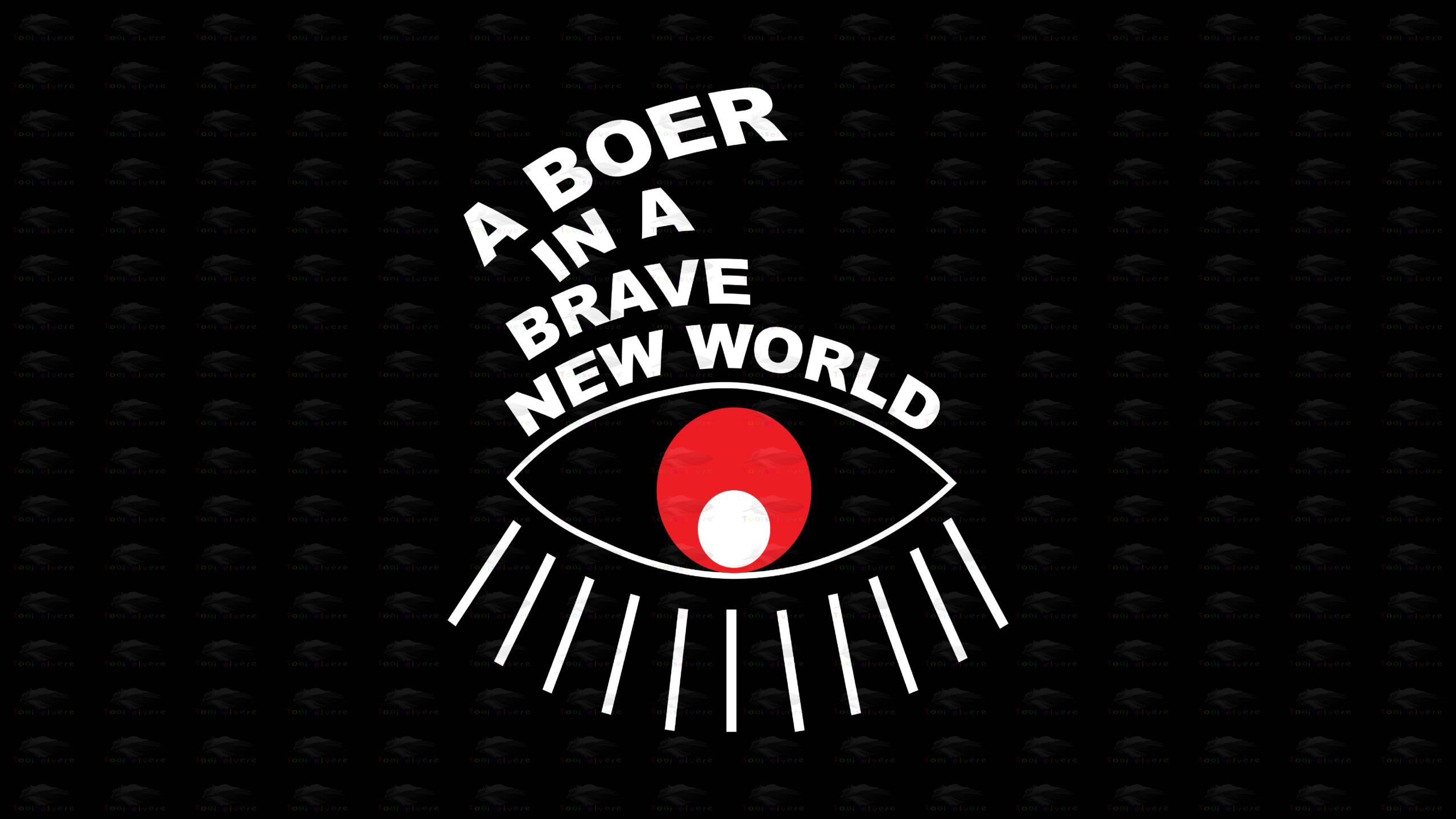
Copyright © 2026 Illustration by Wilhelm Laufs
Chapter 1
In 1517 Europe the people were being held hostage by the church through a system of debt to gain and maintain power and control. You owed a debt to God for the mistakes you’ve made in return for the salvation of your eternal soul. This debt could be paid with Visa or Mastercard at shops, restaurants and post offices all around the Vatican. They processed payments faster then the PayPal Mafia and kept the funds in safe custody for God, earning him some interest, and creaming a small commission and handling fee off the top.Through confession booths they also got access to endless blackmail material tapping into the deepest darkest parts of the human sole.
It is said that history doesn’t repeat but it rhymes. In those days the church held the “keys to heaven” and today the banks hold the “keys to value”. Depression is wide-spread and many people are very sad. People are being held hostage through their mortgages, credit-card debt and digital footprints. It is also a system of debt used to gain and maintain power and control. Inflation constantly devalues our money. Tomorrow you have to work twice as hard to afford the necessities you bought yesterday. There is also a fee for everything. Edward Snowden recently called America “The Land of the Fee and the Home of the Slave.” It pretty much sums up South Africa too. Additionally our taxes provide a steady cash flow to politicians and big business as they buy one fancy car after the other, and multiple citizenships by investment in foreign lands.
One thing is certain though. The times are changing. History reminds us that those in control will do anything and everything they can to hold on to power. However, ultimately, corruption cannot be sustained. A corrupt systems ends up destroying itself.
A dangerous journey awaits. But a better world also awaits. It is for us to build.
Chapter 2
Martin Luther nailed his 95 Theses to the door of the Castle Church in Wittenberg. In it he challenges the Church’s monopoly on the “keys to heaven” and the administration of grace. He argued people didn’t need a middleman (a priest) to reach God.: 1) Forgiveness is a free gift from God and cannot be bought or sold to fund building projects (like St. Peter’s Basilica in Rome); 2. The Pope does not have the power to free souls from Purgatory. If he did, he should do it out of love and not for money; 3. Inner Repentance is more important than External Repentance. It is a person’e sincere, internal change of heart that counts.
In 1542 the church responds by launching the Counter Reformation (Dicastery for the Doctrine of the Faith) to stop the spread of Protestantism in Italy. Interestingly enough it still technically exists today.
Some of the methods of torture used during the Counter Reformation included 1. The Strappado. It left no visible marks. The victims hands were tied behind their back and they were hoisted into the air by a rope attached to their wrists; 2 The Trough / Waterboarding. The victim was tied to a wooden frame, a cloth was placed over their mouth and nose and water was slowly poured over it. It created a sensation of drowning and suffocation; 3) The Rack. The Victim was tied to a wooden table by the ankles and wrists. A hand-cranked roller would then pull the limbs in opposite directions. 4) Burning of the Soles. The victim’s feet were placed in stocks, and the soles of their feet were coated with lard or fat. They were then held near a fire. The fat acted as a conductor, slowly “frying” the skin and nerves of the feet.
Many people fled to escape the persecution. Johannes Gutenberg invented the printing press in Europe around 1440. When Martin Luther wrote his 95 Theses in 1517, the printing press had been around for about 77 years. This is how his ideas spread around the globe.
In 1652 three ships, the Drommedaris, Reigher and Goede Hoop arrived in Cape Town. The VOC (Vereenigde Oos Indiese Companje) established a trading post and refreshment station there. They were a protestant organization and employed many protestant reformers. In 1688 the French Huguenots arrived. King Louis XIV of France revoked the Edict of Nantes. This made Protestantism illegal in France.
In 2012 I did a tour of the Great Wall of China. The tour guide said it is the longest cemetery in the world because so many people died while building it. They were buried right there next to the wall. This made me think of the dangerous journey by boat from Europe, around the Cape of Good Hope, and onwards to India, and how many people also must have died along the way. I suppose this sea route and is also a very long cemetery…
Chapter 3
By the late 18th century the VOC was crippled by corruption, high military costs, and the disastrous Fourth Anglo-Dutch War (1780-1784)
In 1795 France invaded the Netherlands and on December 31, 1799 the Dutch government officially revoked the VOC’s charter, liquidated the company and took over its debts and remaining territories.
In 1975 with the battle of Muizenberg the British landed troops and defeated the VOC controlled garrison as they feared the French would block access to India.
They then returned the colony to the dutch in 1803 but took it again in 1806 at the Battle of Blaawberg.
The Great Trek (starting around 1835) was a pivotal migration in Southern African history, where thousands of Dutch-speaking colonists, known as Trek Boere, left the British-controlled Cape Colony to venture into the interior.
The main reasons for the Great Trek were:
1. The Boere were again under Roman Catholic Rule and didn’t want to serve the Pope. Memories of the Counter Reformation still lingered large.
2. With the British Slavery Abolition Act of 1833 the Boere felt the compensation offered by the British government was inadequate and difficult to claim, as it often had to be collected in London. Beyond the money, the Boere didn’t like the shift in social hierarchy.
3. The Cape Colony was becoming overcrowded. As the population grew, young farmers found it increasingly difficult to acquire affordable, fertile land. The British government had introduced a new land tenure system that replaced the traditional “loan farm” system with more expensive, surveyed, and taxed land.
4. The Eastern Cape frontier was a zone of constant conflict between the Boere and the Xhosa people. The Boere felt the British government failed to provide adequate military protection against Xhosa cattle raids. They were particularly angered by the British decision to return the Queen Adelaide Province to the Xhosa in 1836.
5. The British “Anglicization” policy felt like an assault on the Boer identity. English was made the official language of the courts and government in 1822, displacing the Boer Dutch/Afrikaans.
6. Ultimately, the Trek Boere wanted to live under their own laws, away from the “meddlesome” British administration. They sought to establish an independent Boer Republic where they could govern themselves according to their own religious and social values.
Chapter 4
A while ago I listened to a video by Colyn Serfontein where he encourages people to “Luister vir die Fluister”. It means “Listen to the Whisper”. He describes how his grandfather would stand in his garden placing one hand on a tree. When he asked him what he was doing he said he was listening to the whisper.
It made me wonder about the Trek Boere and what it must have been like for them in the vast open spaces as they trekked inland. There were no institutions asking money to facilitate their conversations with God. They had a direct connection to God through nature.
The concept of Sophia as “Mother Nature” is a intersection of ancient philosophy, mystical theology, and modern environmental spirituality. While Sophia literally translates from Greek as “Wisdom,” her identity has evolved from an abstract virtue into a personified, life-giving force that sustains the material world.
In the Hebrew Bible (specifically Proverbs), Sophia is described as a master craftswoman who was with God at the beginning of creation. She is the “breath of the power of God,” suggesting that nature is infused with divine intelligence.
In Gnosticism, Sophia is often seen as a divine being who fell from the higher realms. Her struggles and emotions are said to have actually formed the material elements of our world. In this view, the Earth isn’t just “stuff”—it’s the physical manifestation of Sophia’s soul.
In the Renaissance and through various mystical traditions, Sophia became synonymous with the Anima Mundi, or the World Soul.
Unlike a distant “Clockmaker” God, Sophia represents the divine inside the trees, oceans, and animals.
As Mother Nature, she is the biological and spiritual mother of all living things, providing the “blueprint” for growth and evolution. She acts as the mediator between the purely spiritual realm and the physical, organic world we touch.
We can think of Sophia as the “Intelligence within the Wild.” She isn’t just the scenery; she is the complex, self-organizing wisdom that allows a seed to know how to become a tree. When people refer to Sophia as Mother Nature, they are usually acknowledging that the natural world is alive, conscious, and inherently sacred.
Chapter 5
In Riversdal South Africa you will find a mountain called “Sleeping Beauty”. It looks like the sleeping princess. If you ride up the Garcia Pass and over the mountain you find the “Langkloof”. However, this is not the famous “Langkloof/Long Ravine”, it is a different ravine with the same name and definitely not as long. Where the famous Langkloof stretches between Herold (near George) and the Heights (near Humansdorp) in the Eastern Cape and is approximately 160km long, this Langkloof is only about 20km, if I had to guess, and stretches through farm roads.
To me it serves as a beautiful metaphor. Especially if you are struggling with depression, sadness, sickness, or any difficult life challenge, and find yourself in the “long ravine” of life. Maybe the long ravine you find yourself in is much shorter than you thought, and the sun is already coming up in the distance.
I wonder what the Trek Boere must have thought of Sleeping Beauty when they passed her? What did they think about “sleeping potential” and the journey they were on? Did they ever even think their courage, bravery and trust in the unknown would lead them all the way to a pot of gold? Or were they too busy surviving? Would they have been able to predict the conflict, blood, sweat and tears their trek would require and the perseverance that would be necessary to gain even a glimpse at independence? One thing is certain, their grit and determination cannot be denied.
In physics, undiscovered potential is the tension in the universe before the spark.
Potential energy is energy held by an object because of its position relative to others, stresses within itself, or its electric charge.
It suggests that your “potential” isn’t a magical gift, but a result of where you have placed yourself and the tension you’ve built up through preparation.
Before the “measurement” of your life occurs—through a choice or a crisis—you are a wave function of infinite possibilities. Undiscovered potential is that uncollapsed wave; it is the mathematical reality that you are everything you could be until the moment you commit to being one thing.
Our senses only perceive a fraction of reality. Just as we cannot see ultraviolet light or hear ultrasonic frequencies, we often cannot perceive our own capacity because it operates on a “frequency” we haven’t tuned into yet.
Just as 85% of the universe’s matter is “dark” (invisible but exerting a massive gravitational pull), the majority of our influence on the world is unseen.
Potential is like water reaching 99°C. To the casual observer, it’s just hot water. But that final degree of heat triggers a phase transition into steam—a total change in state and power.
Please like, comment and subscribe to support my work. Visit my website for more info: wilhelmlaufs.com
T-shirt available @ tooiselvere.com
Thanks for reading.

Leave a Reply